
MS-SBN, Part 2: Amy Turned a High-School Dream Into a Website
Published:
In the first article in this series, I argued that the website is becoming the first useful software surface for small businesses and nonprofits.
This article is about what that looks like when the person building the website is not a software developer.
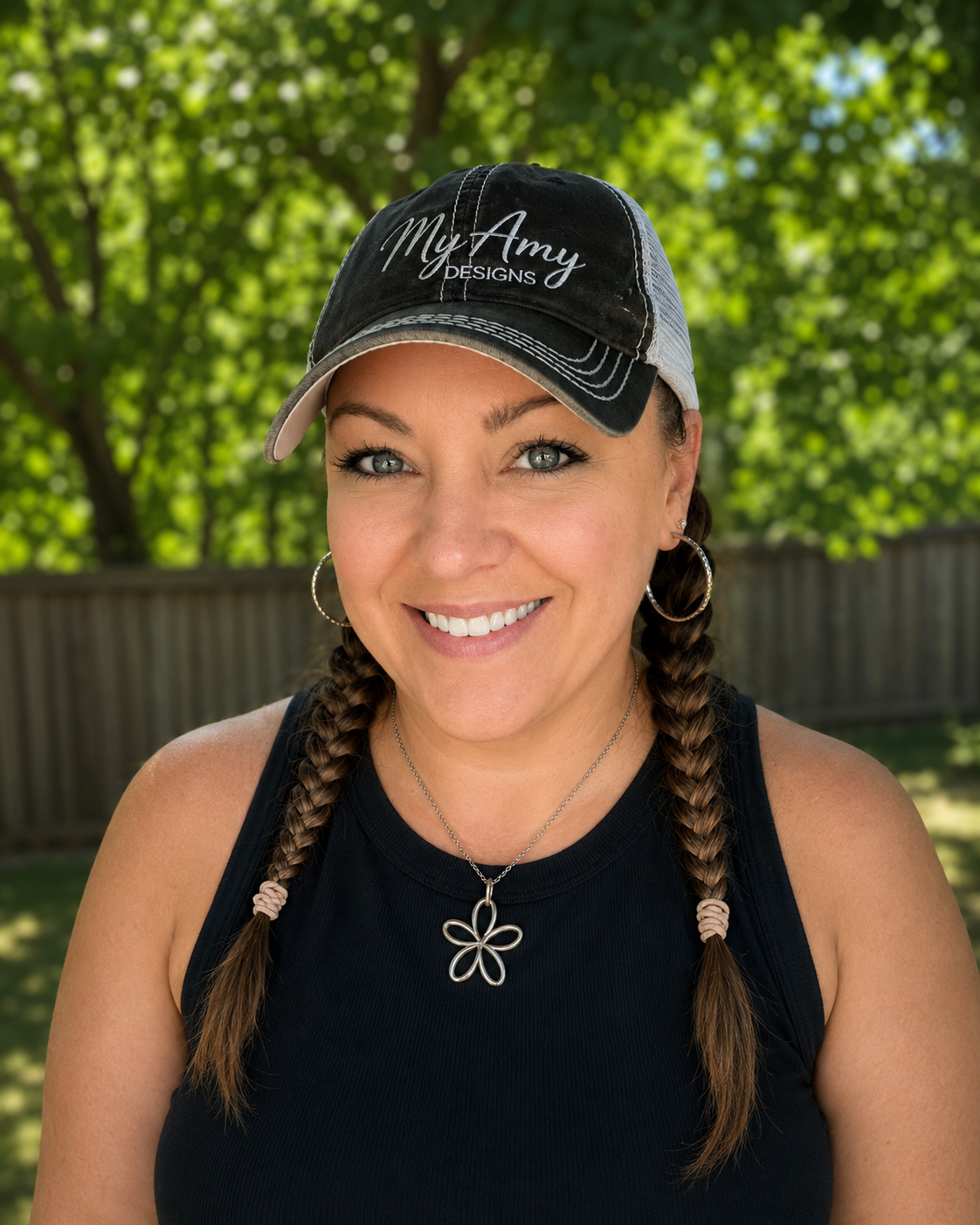
It is about Amy Givens, the founder of MyAmy Designs & Remodeling, and a domain name she had been carrying around since high school.
The Short Version
Amy had owned the MyAmy Designs domain for years.
Back in high school, she imagined MyAmy Designs as the name of a future fashion line. Life moved in another direction. During her senior year, she got into construction and discovered that she loved it.
Over the next two decades, she built a career across residential construction, remodeling, purchasing, estimating, project management, and warranty. The dream of owning her own business did not disappear. It changed shape.
During that career, Amy developed experience across every phase of residential construction, from estimating and purchasing to project management, warranty, and remodeling. That broad background allows her to understand not only how a project should look when it is finished, but also how to budget, schedule, and execute it successfully.
Eventually, Amy used ChatGPT and Codex to transform the domain that had once represented a fashion idea into the website for MyAmy Designs & Remodeling.
That is the part of the story that interests me.
AI did not invent Amy’s business. It did not give her twenty years of construction experience. It did not decide what kind of company she wanted to build.
It helped her turn a long-held vision into something tangible.
A Domain Before a Website
Amy told me:
“Owning my own business has always been a dream. I’ve actually owned the MyAmyDesigns domain since I was in high school.”
At the time, the name belonged to a different dream. She wanted to become a fashion designer, and her clothing line was going to be called MyAmy Designs.
Then she found construction.
That shift matters because small-business stories rarely move in straight lines. A name, a skill, a customer need, and a business model can take years to line up. The domain can exist long before the company is ready. The company can exist in someone’s head long before the website exists.
For more than ten years, Amy kept noticing something about the way she worked:
“If I’m going to put this much passion and effort into someone else’s business, why not build my own?”
That is not a software problem.
It is the moment before the software problem appears.
The Confidence to Start
One of the most interesting parts of Amy’s story is how ordinary the AI interaction was.
She asked ChatGPT what it would take to qualify for a general contractor’s license. She shared her work history and experience, and the conversation helped her recognize that she likely had the experience necessary to pursue her general contractor’s license. That gave her the confidence to take the next steps.
That conversation did not replace licensing rules, professional judgment, or the actual work of starting a company. But it changed the shape of the question.
Instead of asking, “Am I allowed to even think about this?” she could ask, “What steps do I need to take next?”
For many small-business owners, that is where AI becomes useful first. It is not magic. It is a way to organize a decision that felt too large, too vague, or too intimidating to start.
The Website Was the Next Step
Once Amy was ready to formally launch MyAmy Designs & Remodeling, the website became the obvious next step.
Social media can help a business be seen, but it is scattered. A website gives customers one place to understand the business, see the work, learn the process, and make contact.
Amy’s site does that clearly. It presents kitchen remodeling, bathroom remodeling, basement finishing, additions and renovations, design consultation, material and finish selection, budget planning, estimating, and project coordination. It explains her service area across Metro Atlanta. It shows project imagery and gives homeowners a direct way to start a conversation.
For homeowners, the website has become the digital front door to the business.
The site is not just a brochure. It is the beginning of the customer workflow.
Codex Did Not Remove the Judgment
Amy used Codex to help build the website and followed its instructions to upload the site to GoDaddy.
That does not mean she pressed a button and received a finished business.
The website was not generated in a single prompt. It took many rounds of planning, revisions, testing, rewriting, redesigning, and refinement before it reflected the business Amy wanted to build.
The important work was still Amy’s work:
- deciding what the company should say
- choosing what services to present
- shaping the tone and visual direction
- checking whether the site felt like her brand
- refining the layout, images, and mobile experience
- deciding when it was good enough to launch
One of the best lines in the notes Amy prepared was this:
“It wasn’t just pushing a button. AI can build what you ask for, but you still have to know what you want and be willing to iterate.”
That is exactly right.
AI made the technical path more accessible. It did not replace taste, judgment, context, or persistence.
Why This Matters for Small Businesses
When I talk to small-business owners about software, I often hear some version of this:
“We are doing it ourselves.”
That used to be a warning sign. It often meant a patched-together website, a fragile spreadsheet, or a generic tool that did not quite fit the business.
Now it can mean something else.
It can mean the owner has enough help from AI tools to build the first useful version themselves.
That does not make professional designers and developers irrelevant. In many cases, they still add enormous value. Some business owners do not have the time, interest, or patience to iterate through a website. Some workflows need deeper engineering. Some sites need stronger design systems, integrations, analytics, accessibility review, search strategy, security, or ongoing support.
But Amy’s story shows why the boundary is moving.
A small-business owner with a clear vision can now get farther than she could have a few years ago.
The Real Pattern
The pattern is not “AI builds a website.”
The pattern is:
- A business owner has a real domain, real experience, and a real customer need.
- AI helps turn fuzzy next steps into a concrete plan.
- Codex helps turn that plan into working website files.
- The owner keeps making the business, design, and content decisions.
- The website becomes a public starting point for the business.
That is a much more useful story than pretending AI replaces the human.
Amy brought the dream, the construction experience, the service model, the design sense, and the willingness to keep refining. AI helped her move faster from idea to implementation.
Visit MyAmy Designs & Remodeling
If you are looking for remodeling help in Metro Atlanta, especially around kitchen remodeling, bathroom remodeling, basement finishing, additions, renovations, design consultation, material selection, budget planning, estimating, or project coordination, take a look at MyAmy Designs & Remodeling.
Website: myamydesigns.com
What I like about Amy’s story is that the website feels connected to the business behind it. It is practical, visual, and personal.
Amy’s story is not about AI replacing experience. It is about an experienced construction professional using modern tools to launch the business she had envisioned for years. The technology accelerated the process, but the expertise, judgment, and passion behind MyAmy Designs & Remodeling were already there.