
Modern Software for Small Businesses and Nonprofits, Part 1: The Website Is Becoming the Software
Published:
This article starts a new series on modern software for small businesses and nonprofits.
In The End of Software Scarcity, I argued that AI agents change the economics of software. This series is about the next step: what small businesses and nonprofits can do when custom software is no longer reserved for large budgets.
The first useful thing is often the website.
The Short Version
The old distinction between a static website and a dynamic website is becoming less useful.
For years, a small organization could afford a brochure site: hours, services, photos, maybe a contact form. The moment the site needed quote requests, uploads, saved data, volunteer coordination, or admin screens, it became a software project.
AI agents and inexpensive hosted services are changing that boundary. A low-traffic local business or nonprofit can now start with one small custom workflow attached to the website.
The Website Becomes Software
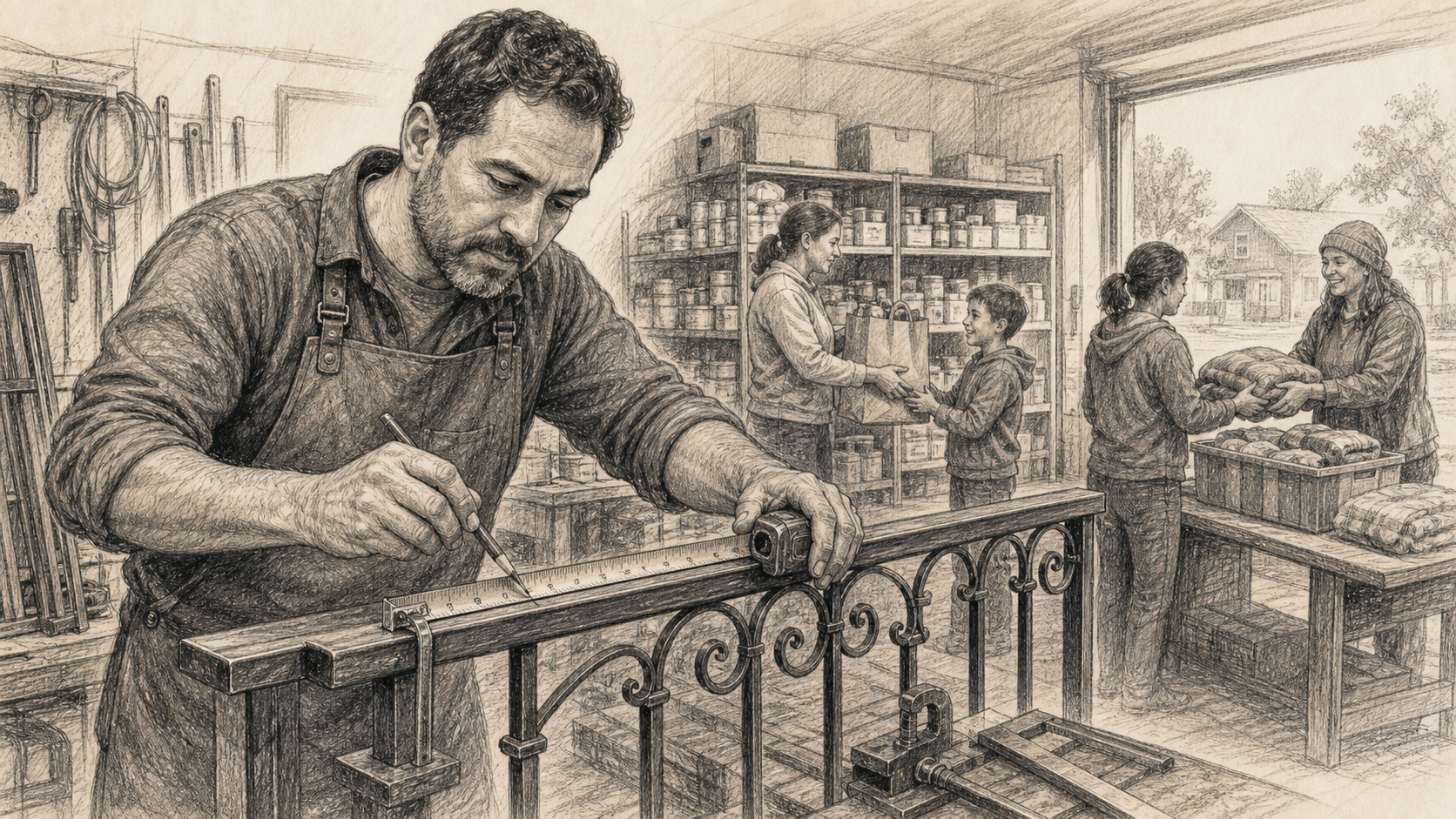
A welding shop can move beyond photos and phone calls. The site can collect measurements, material, deadlines, and images, then turn those submissions into a quote queue. Realistic generated reference images can help customers understand shapes without relying on imagination from a rough sketch.
A nonprofit can add a mobile-friendly volunteer handoff: what was done, what was skipped, what changed, and what the next group should pick up.
A food pantry can stop turning shelf photos into grocery lists by hand. A simple update screen can track what came in, what went out, and what should be bought next.
None of this is exotic enterprise software.
It is the website carrying a little more of the work.
The Judgment Still Matters
The bad version of this idea says every small organization should custom-build everything. I do not believe that. Spreadsheets, SaaS tools, and generic forms are still useful.
The better question is:
Is this workflow specific enough, frequent enough, and painful enough that a small custom tool would make life better?
That is where AI-assisted development matters. It lowers the cost of trying a practical workflow, but it does not remove the need for judgment.
When software was expensive, small organizations adapted themselves to generic tools. When software becomes cheaper, software can adapt more to the organization. The next generation of small-business and nonprofit websites will not just say what the organization does. They will help the organization do it.